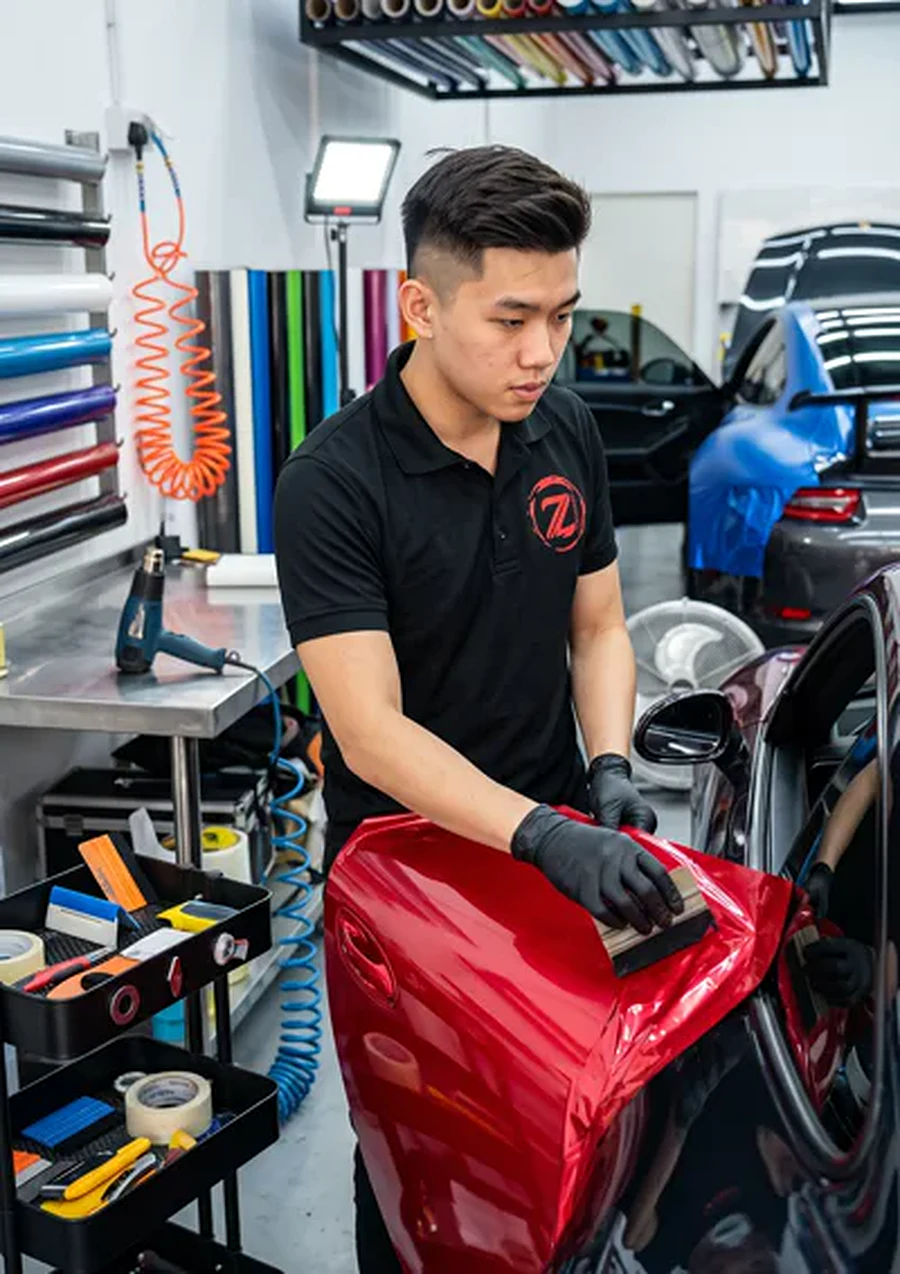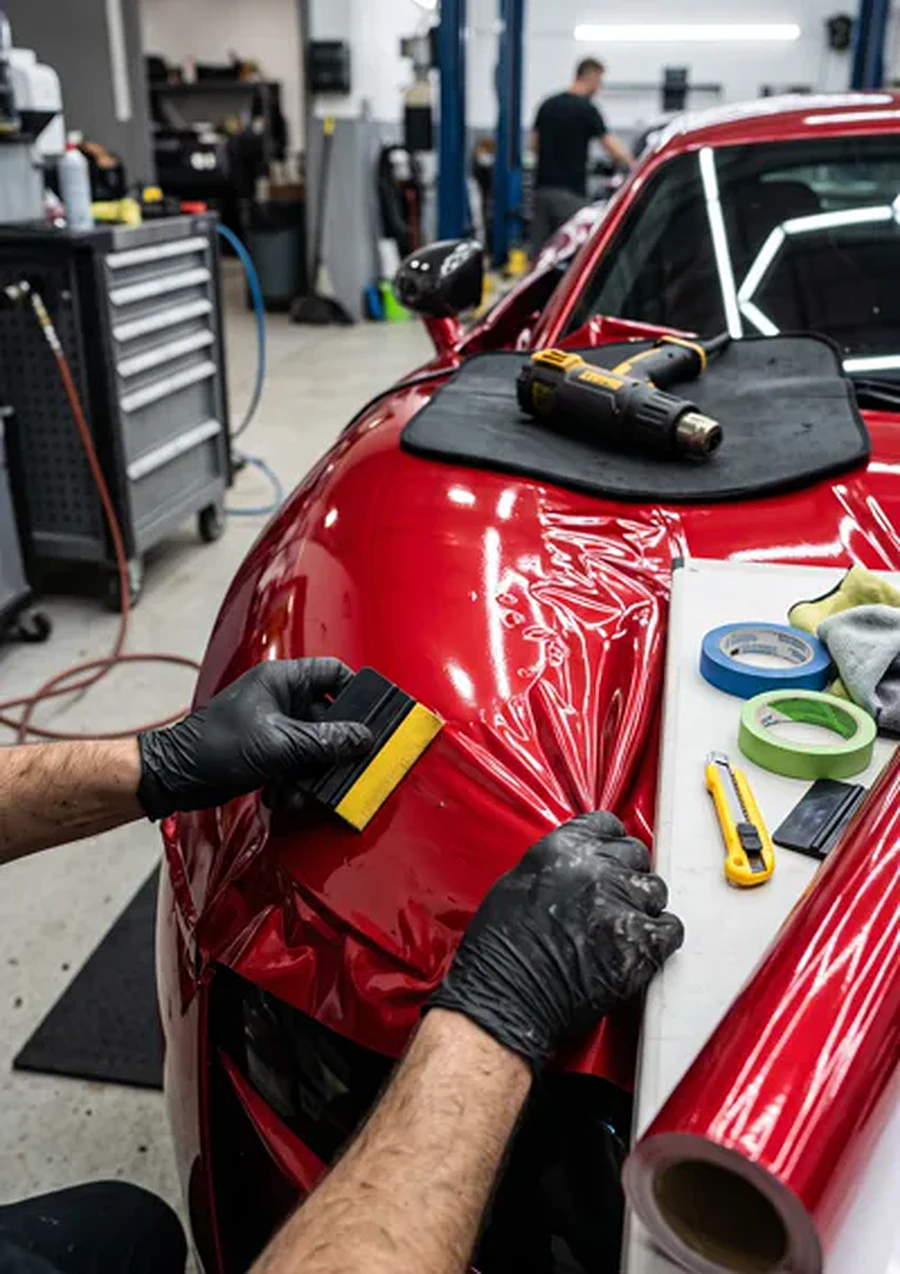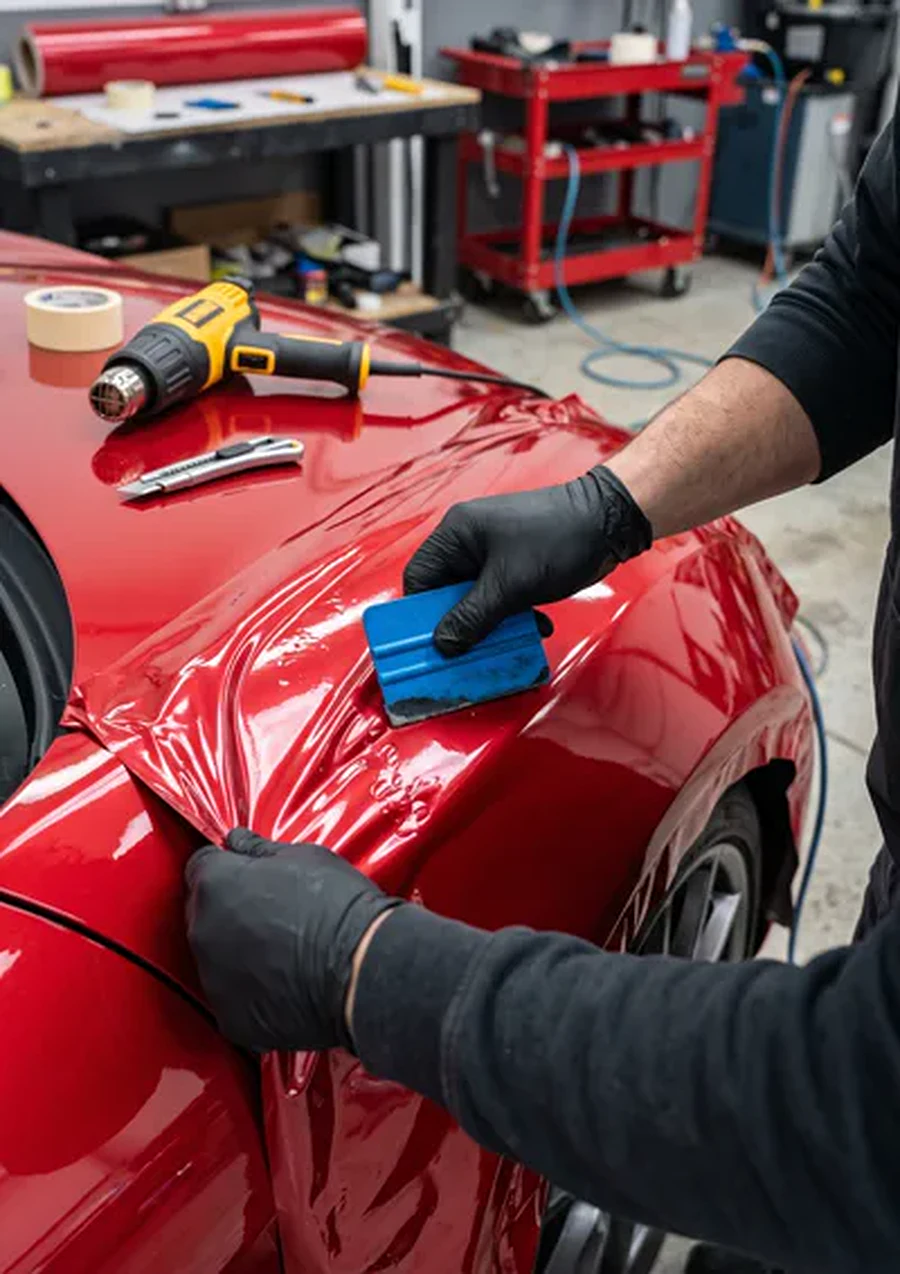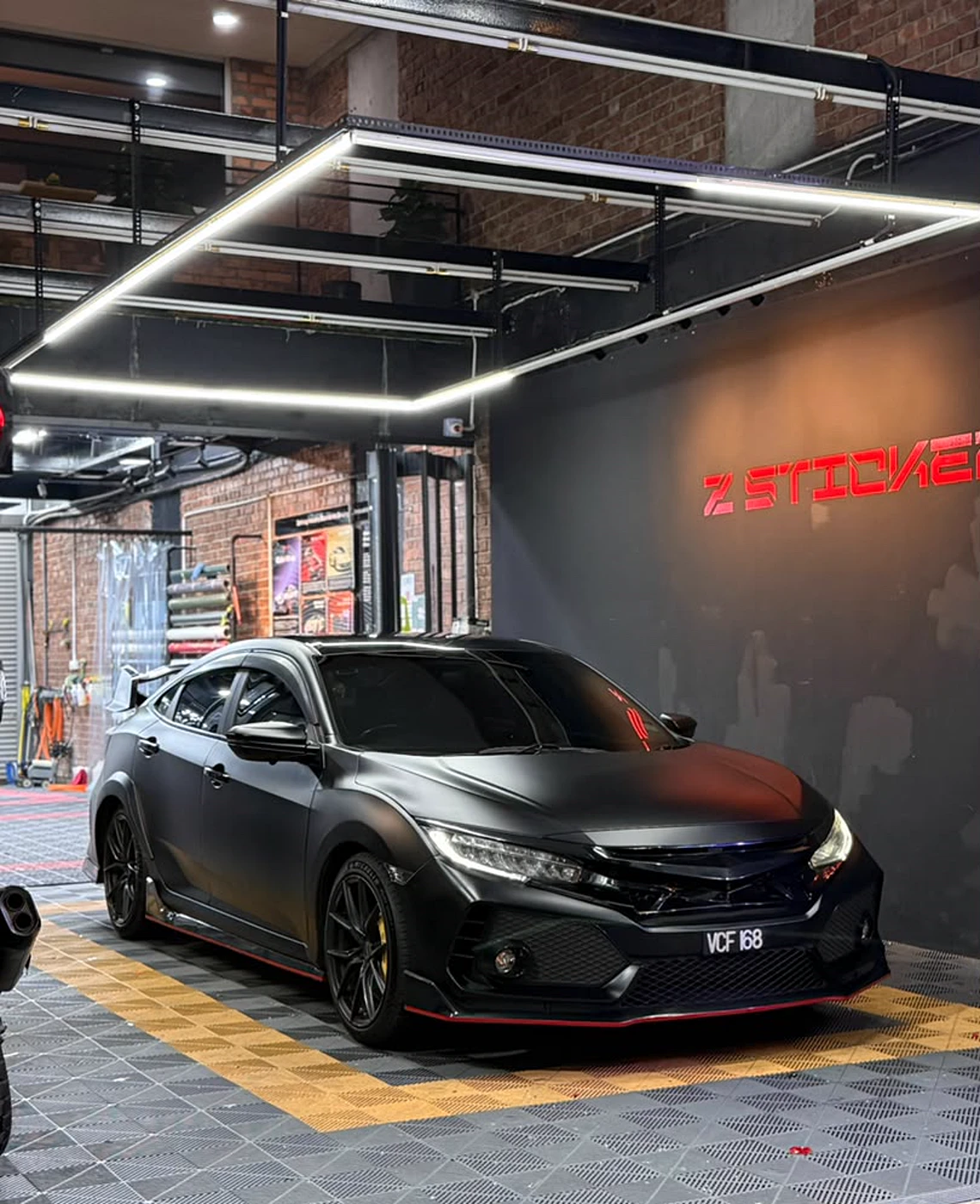
Yes – in most cases a scratched car wrap can be fixed, and the fix depends on how deep the scratch is. A light surface scratch on a gloss finish can often be heat-treated and smoothed out on the spot. A deeper scratch or small tear usually needs a patch – a matched piece of vinyl blended into that one spot. Only large tears, wide scraped areas, or damage across a big section of a panel need the whole panel re-wrapped. A scratched wrap is almost always cheaper and faster to fix than a scratch in bare paint.
Below is the honest breakdown: which scratches heal on their own with heat, how a patch repair actually works, when a full panel re-wrap is the better call, and how to avoid needing any of this in the first place.
Can a Scratched Car Wrap Be Fixed? Quick Answers
| Question | Quick answer |
|---|---|
| Light surface scratch? | Yes – heat treatment often smooths it out |
| Deeper scratch or small tear? | Yes – patch repair, matched to that spot |
| Large tear or big scraped area? | Needs a full panel re-wrap |
| Cheaper than fixing scratched paint? | Yes, almost always |
| Can I fix it myself? | Minor cases yes, patches best left to a pro |
Minor Scratches: The Heat Treatment Fix
Quality automotive vinyl, especially gloss finishes, has a thermoplastic quality – light surface scratches can sometimes be softened and smoothed back together with careful, even heat from a heat gun. This works best on:
- Shallow scuffs that haven’t cut through the film’s colour layer
- Fine scratches you can see under direct light but can’t quite feel with a fingernail
- Gloss finishes, which respond to heat more visibly than matte or satin
This is a quick fix an installer can often do on the spot, without removing or replacing any material – it’s genuinely one of the underrated advantages of a wrap over paint, where the same kind of light scratch usually needs polishing or touch-up paint.
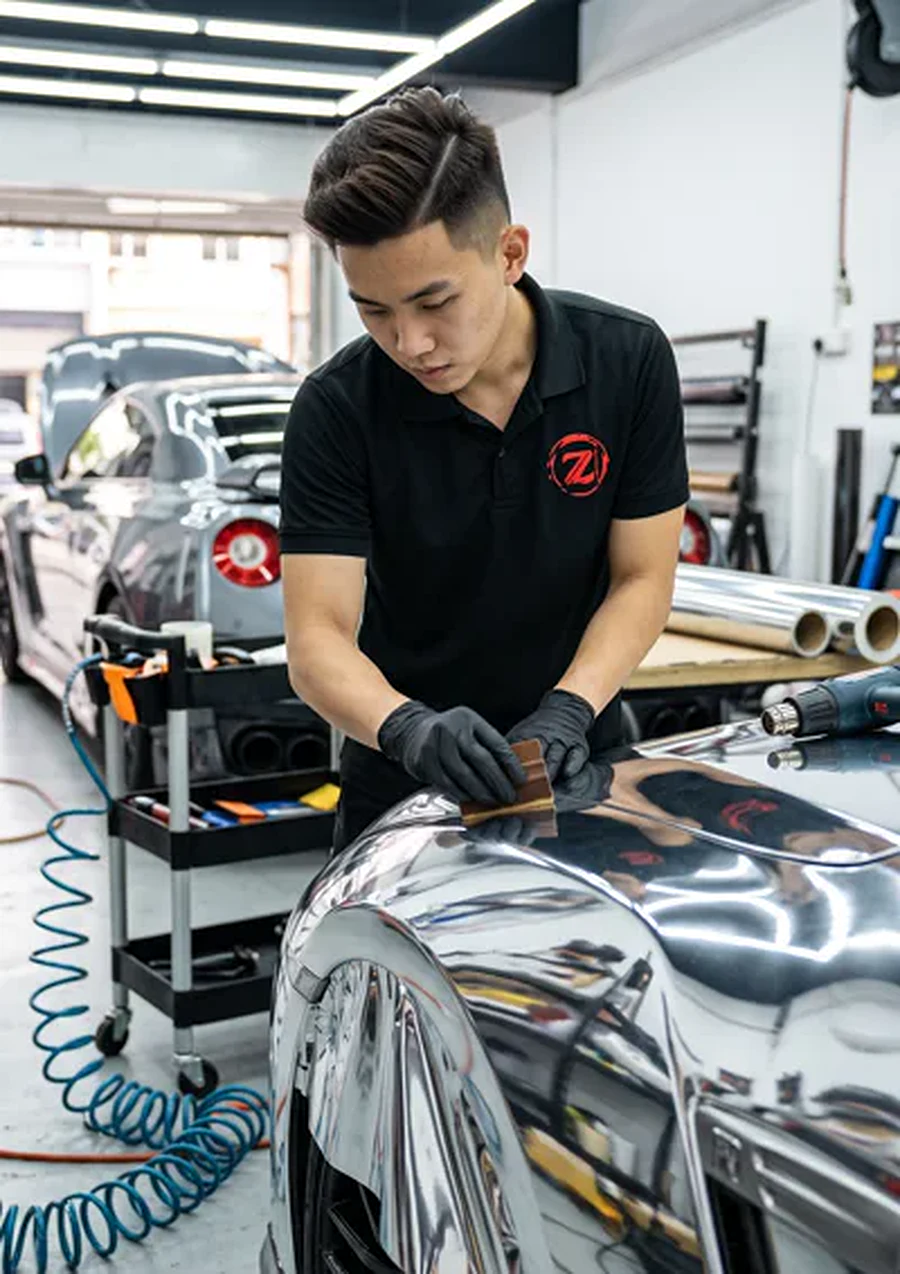
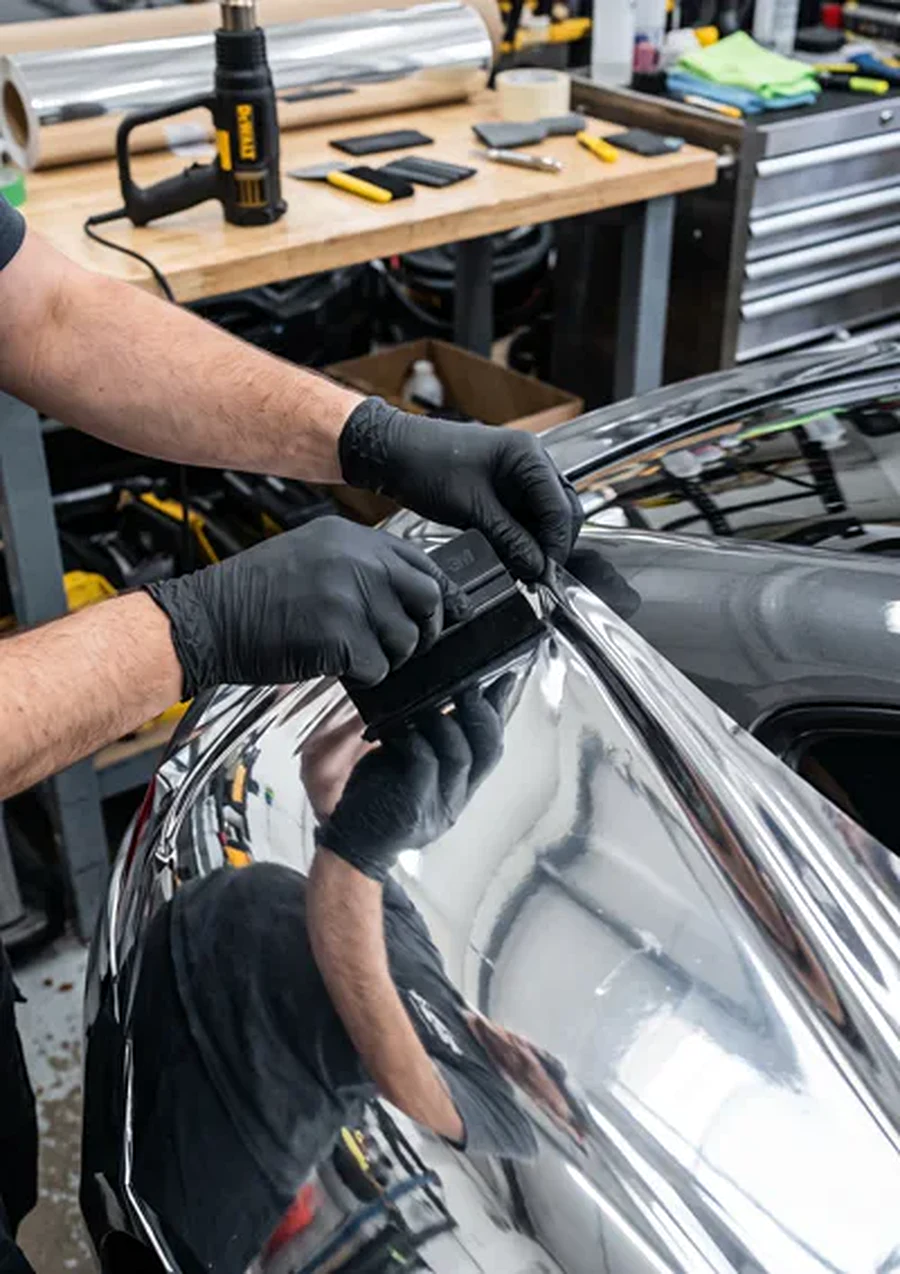
The technique itself is straightforward for someone experienced: gentle, even heat is applied directly over the scratch until the vinyl softens slightly, then a soft cloth or gloved hand smooths the surface while it’s warm. Too much heat or uneven application can do more harm than good, which is why this is worth having a professional do rather than experimenting with a household hairdryer.
Deeper Scratches: Patch Repair Explained
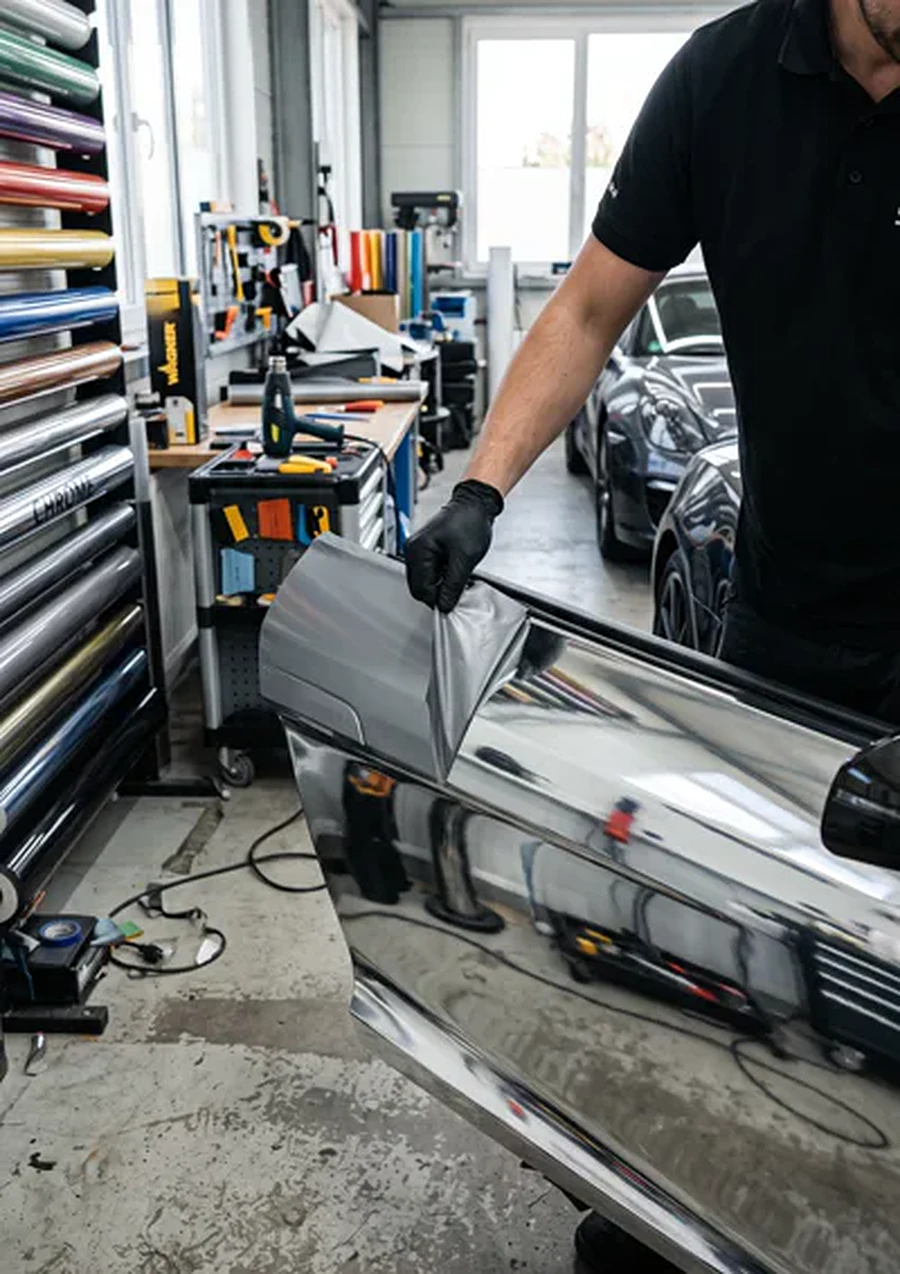
When a scratch cuts through the vinyl or there’s a small tear, heat alone won’t fix it – but that doesn’t mean the whole panel needs redoing. A patch repair involves:
- Cleaning the damaged area thoroughly so the new adhesive bonds properly.
- Cutting away the damaged section cleanly, following a natural line or edge where possible.
- Cutting a matched piece from the same film batch – colour, finish, and batch matter here, since vinyl can vary slightly between production runs.
- Applying and heat-blending the patch so the seam sits as flush and invisible as possible.
Done well by an experienced installer, a patch on a busy or textured area (like carbon fibre finish) can be nearly invisible. On a plain, solid gloss colour under direct light, a patch seam is usually visible up close but not distracting from normal viewing distance. This is the honest trade-off worth knowing before you decide between a patch and a full re-wrap.
One detail that matters more than people expect is film batch matching. Vinyl colour can shift very slightly between production runs, even within the same product line from the same brand. A good installer either keeps offcuts from your original job specifically for this purpose, or sources film from the closest possible batch and picks a less visible spot – like a lower door panel rather than the centre of a bonnet – if an exact match isn’t available.
When You Need a Full Panel Re-Wrap Instead
A patch stops making sense once the damage is too big or too central to hide well. Signs you need the whole panel redone rather than patched:
- The scratch or tear runs across a large, highly visible area like the centre of a bonnet or door.
- There are multiple scattered scratches across the same panel rather than one isolated spot.
- The vinyl has aged or faded slightly, so a brand-new patch piece would visibly mismatch the surrounding colour.
- You want a flawless, showroom finish rather than an acceptable but visible repair.
A full panel re-wrap costs more than a patch but far less than redoing the entire car, and it guarantees a clean, uniform result on that panel with no seam to spot.
A good installer will usually be upfront if a patch isn’t going to give you a result you’ll be happy with, rather than attempting one anyway. It’s a judgment call best made in person, since photos rarely capture exactly how visible a scratch is under different lighting and how well a matched offcut is likely to blend in that specific spot.
How to Avoid Scratches in the First Place
- Hand wash only – automatic brush washes are the single biggest cause of everyday wrap scratches.
- Use a soft microfibre mitt, never a stiff brush or sponge with grit trapped in it.
- Be careful loading and unloading items from the boot or roof – sharp edges of luggage or bike racks are a common, avoidable cause of scratches.
- Park away from bushes, hedges, and tight spaces where branches or walls can catch a panel.
- Address small scratches early – a quick heat-treatment fix on a fresh light scratch is far easier than dealing with dirt and UV damage that’s had months to set into it.
- Consider PPF over high-impact panels like the front bumper and bonnet leading edge, since these take the most stone chips and scrapes and a clear film adds an extra layer of protection over the wrap itself.
None of this means you need to be overly precious about a wrapped car – it’s still a daily driver, not a show car under glass. It just helps to know that most everyday marks are genuinely fixable, so a small scratch doesn’t need to feel like a crisis.
Questions People Ask
How much does a wrap patch repair cost compared to a full re-wrap of that panel?
A patch is typically a fraction of the cost of redoing the whole panel, since it only uses a small offcut of material and takes far less labour time – often a job that’s done within an hour rather than requiring the panel to be booked in for a full day.
Will a patch repair be noticeable to other people?
From normal viewing distance, usually not, especially on textured finishes. Up close in direct light on a plain colour, a careful eye might spot the seam, which is the main trade-off compared to a full panel re-wrap.
Can I patch a scratch myself with a leftover offcut of vinyl?
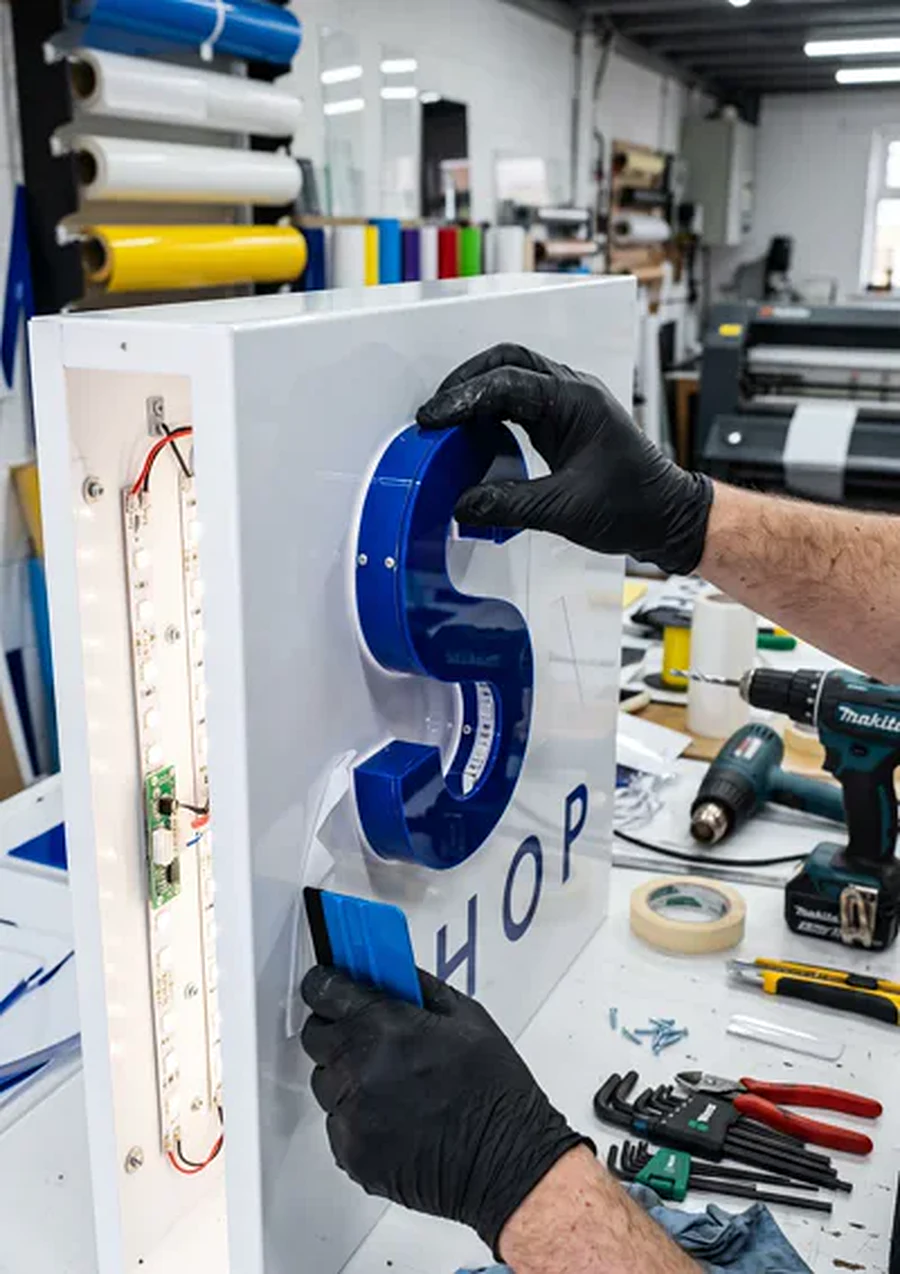
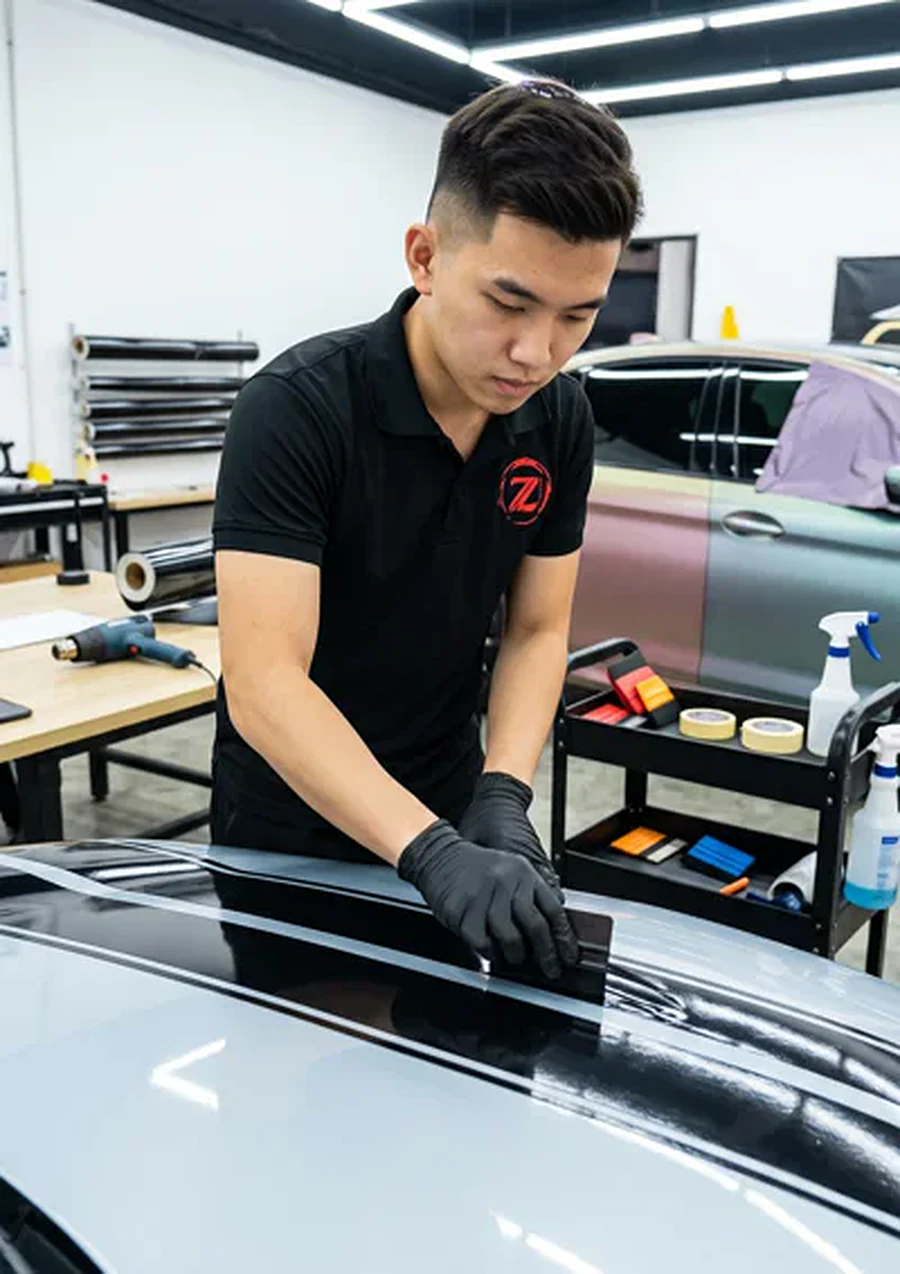
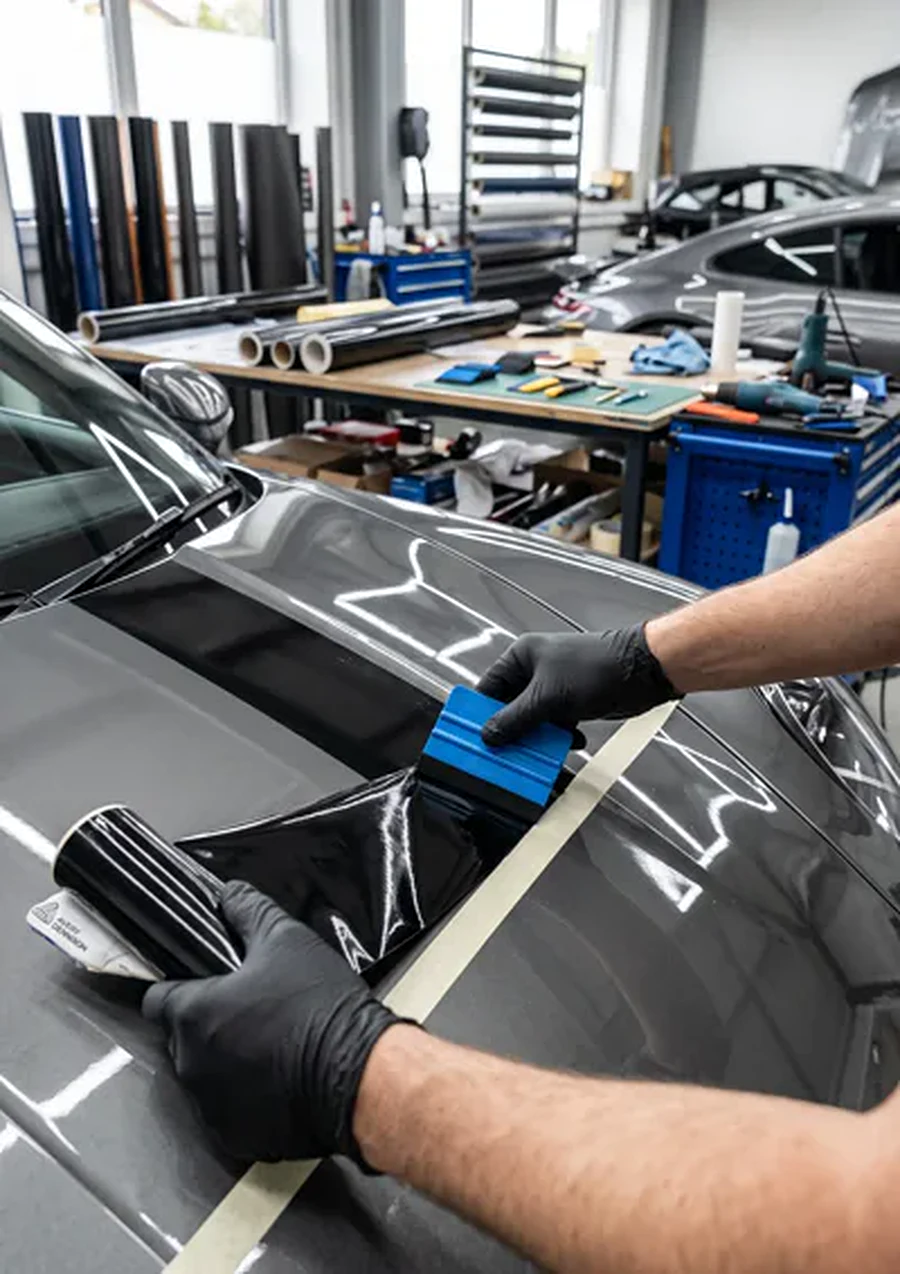
For a very small, hidden spot you can try it, but getting a seamless blend takes practice with heat and a squeegee – for anything visible, a professional patch will look noticeably cleaner.
Does a scratched wrap need to be fixed immediately, or can it wait?
It’s not urgent if the scratch is only cosmetic, but leaving it exposes the raw edge to dirt and moisture, and it’s easier to match and repair while the surrounding vinyl hasn’t aged or faded further.
Does insurance cover a wrap scratch caused by someone else, like a car park scrape?
If the incident is a covered claim (such as third-party damage), the wrap repair cost can often be included, provided the wrap was declared to your insurer beforehand – the same disclosure rules that apply to the wrap generally also apply here.
Can a wrap patch be applied over a curved or textured panel edge?
Yes, though it takes more skill – heat is used to stretch and conform the patch piece around curves the same way the original installation was done, just on a much smaller scale.
Read next: Does car wrap damage paint? · Car wrap removal · Full car wrap guide
A scratched wrap is rarely the end of the world – light marks often heat right out, and deeper ones can usually be patched without redoing the whole panel. This is one of the quiet advantages of choosing a wrap over paint in the first place: damage is cheaper, faster, and less stressful to put right.
Z-Sticker is based in Taman Sentosa, Klang, Selangor, and we keep offcuts from every job on file for exactly this kind of repair. WhatsApp us a photo of the damage at +60 16-343 8343 for an honest assessment and quote.